Guided Growth Factor Signaling
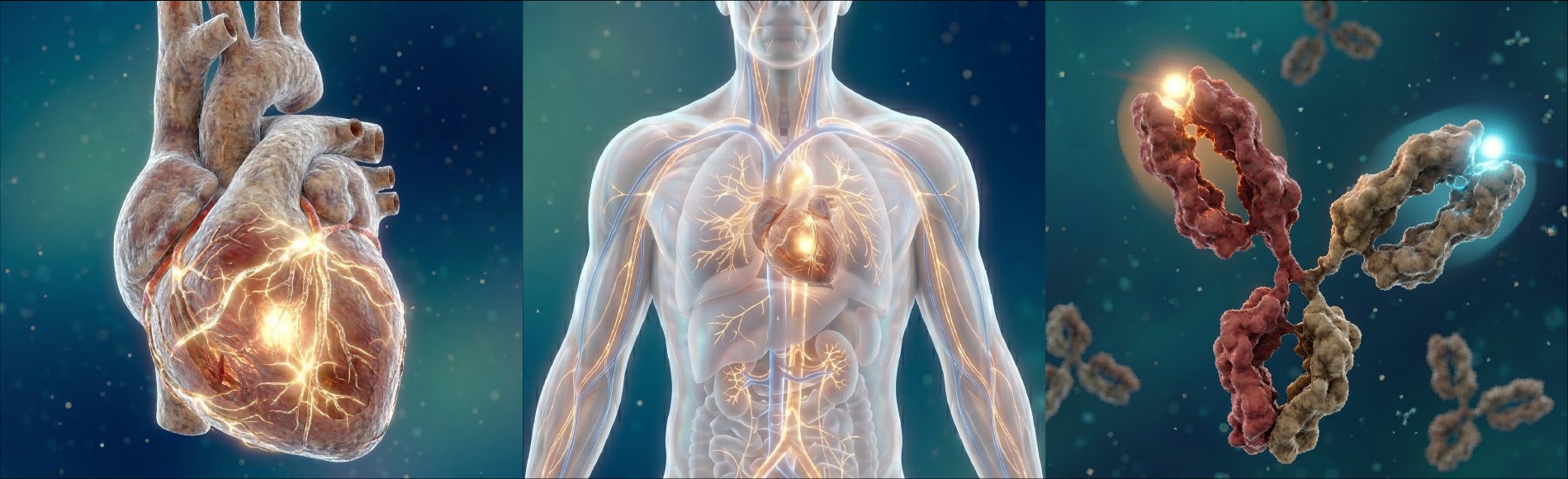
Seipolt Therapeutics engineers precision protein therapeutics that localize protective growth factor signaling to the failing heart, unlocking the myocardium's potential for repair and regeneration without the toxicity of systemic drug activity.
Platform Technology
Growth factors are among the body's most potent mediators of tissue repair, and yet systemic delivery has often failed — potent biological activity distributed across the whole body frequently causes unacceptable side effects.
Seipolt Therapeutics' platform guides and anchors growth factor activity to the tissue impacted by disease, delivering regenerative signals with spatial precision. Local efficacy is maximized while systemic toxicity is minimized.
The approach is grounded in well-validated cardiac biology and directly addresses cellular damage underlying heart failure that existing therapies fail to correct.

Key Platform Attributes
Disease Focus
Heart failure affects millions of patients worldwide and remains one of the leading causes of hospitalization and death despite decades of therapeutic advances. Current treatments slow progression but do not directly address the underlying cellular damage.
Heart failure affects an estimated 6.7 million adults in the US alone, with more than 800,000 new cases diagnosed each year. It is the leading cause of hospitalization in patients over 65.
Approximately 64 million people worldwide live with heart failure, making it one of the most prevalent cardiovascular conditions globally and a leading driver of healthcare costs.
Approximately half of all heart failure patients have heart failure with preserved ejection fraction (HFpEF). This population has limited approved treatment options and represents a critical area of unmet medical need.
Despite modern guideline-directed medical therapy, heart failure carries an 8.1% one-year mortality rate following diagnosis, rising sharply with age and disease severity. Five-year survival remains below 50%.
The Therapeutic Gap
Current heart failure therapies — including RAAS inhibitors, beta blockers, SGLT2 inhibitors, and aldosterone antagonists — reduce hospitalizations and slow progression by modulating neurohormonal pathways. However, none directly address the loss of cardiomyocyte mass and contractile function that drives disease. Growth factor pathways promote cardiomyocyte survival, maintenance, and regeneration. Seipolt Therapeutics is engineering targeted growth factor therapeutics that deliver this regenerative signal directly to the myocardium, complementing existing standard of care rather than competing with it.
Our Approach
Seipolt's therapeutics are designed to be complementary — not competitive — with existing heart failure treatments. The established pillar therapies slow neurohormonal-driven disease progression but do not directly induce repair or regeneration of lost cardiomyocytes. Targeted growth factor signaling addresses this mechanistic gap, enabling use on top of standard of care to extend durable benefit.
The MOAs of guided growth factors are orthogonal to existing approved therapies, enabling use on top of standard of care.
Tissue-targeting concentrates biological activity where it is needed in the heart, reducing systemic effects that pose safety risks.
A single engineering platform enables rapid application across broad disease areas, with a focus on heart failure to meet the needs of millions of patients.
Seipolt's heart failure program is grounded in well-established biology with clinical precedent, reducing mechanistic risk.
Pipeline
| Program | Indication | Modality | Stage |
|---|---|---|---|
| Undisclosed | Heart Failure | Undisclosed |
All programs are investigational and have not been approved by the FDA or any other regulatory authority. Pipeline designations are for organizational purposes only.